

DSSR Named Among Building's Top 150 Consultants for 2026
19 October 2026
DSSR Named Among Building's Top 150 Consultants for 2026 according to Building.co.uk
Scroll down to read more


Jonathan Day Shortlisted for ACE Award
17 October 2026
Jonathan Day Shortlisted for ACE Award
Scroll down to read more
Jonathan Day shortlisted for Future Leader of the Year
DSSR Senior Engineer Jonathan Day has been shortlisted for Future Leader of the Year at the ACE Awards 2026, recognising his progression, increasing leadership responsibilities and contribution to the development of others.
Jonathan’s career with DSSR has developed through the apprenticeship route, combining academic learning with practical project experience. He has since achieved a First-Class BEng in Building Services Engineering (Hons) and established himself as an important member of the team delivering complex healthcare projects.
His project experience demonstrates how his responsibilities have grown. At King George Hospital, Jonathan contributed to the delivery of a 12-bed Intensive Critical Care Unit within a demanding ten-month programme. At Salford Royal’s £35m Acute Receiving Centre, his work included electrical infrastructure for major trauma and surgical facilities, while at University College London Hospital he consolidated CAD information from more than 100 projects across the 75,000m² estate to create a more reliable record of building services infrastructure.
Alongside technical delivery, Jonathan has increasingly taken responsibility for coordination and leadership. He is also committed to supporting those following a similar route into the profession. As the first apprentice within DSSR’s Harrogate office, he now mentors newer apprentices, supports work experience students and represents DSSR at careers events, sharing his own experience of progressing through an apprenticeship into an engineering career.
The Future Leader of the Year shortlisting therefore recognises not simply Jonathan’s technical progression, but the wider contribution he is beginning to make to project teams and to the development of others.
We are delighted to see Jonathan receive this recognition and very proud of everything he has achieved so far.

James MacLeod Shortlisted for ACE Award
16 October 2026
James MacLeod Shortlisted for ACE Award
Scroll down to read more
James MacLeod shortlisted for ACE Award
We are delighted to announce that James MacLeod has been shortlisted at the ACE Awards 2026, recognising the impressive progress he has made since beginning his career in building services engineering.
Based in our Harrogate office, James MacLeod is a Project Engineer who has combined his development at DSSR with continued academic study. He achieved a Distinction in his Level 4 HNC in Building Services Engineering (Electrical) and is now studying towards a BEng (Hons) at Leeds Beckett University.
Having initially supported surveys and other project activities, James has quickly progressed to contributing to electrical design on complex healthcare projects. His experience includes lighting, emergency lighting and life safety systems within live hospital environments, where careful coordination, technical accuracy and compliance are particularly important.
His contribution has also extended beyond his core project responsibilities. After becoming a qualified drone pilot, James introduced drone technology within the Harrogate team to improve the efficiency of surveys and the quality of information captured on site. He also supports other apprentices and has spoken with students at careers events about opportunities within engineering.
The shortlisting is a fantastic recognition of the commitment James has shown to both his academic and professional development, as well as the increasing responsibility he has taken on during his time with DSSR.
We are extremely proud to see his progress recognised at industry level and look forward to supporting him as he continues to develop his career.
DSSR Shortlisted for Consultancy of the Year 2026
14 October 2026
DSSR shortlisted for Consultancy of the Year 2026
Scroll down to read more
DSSR shortlisted for Consultancy of the Year
We are delighted to announce that DSSR has been shortlisted for Consultancy of the Year – Fewer than 250 Employees at the ACE Awards 2026.
DSSR is one of just four consultancies to make the final shortlist, alongside Atelier Ten, Harley Haddow and Sutcliffe. With this year’s entries independently assessed by a panel of industry experts, reaching the final four represents a significant achievement for the business.
The recognition reflects the continued development of DSSR as an independent building services consultancy and the contribution of our people across the business. Our submission focused on the progress we are making through investment in our people, technical capability, collaboration, innovation and sustainable design, while continuing to deliver a high standard of service for clients across a diverse range of sectors.
Being shortlisted is particularly rewarding because it recognises the collective effort behind the business. From the engineers delivering projects and developing new technical solutions to those supporting our clients, people and day-to-day operations, our progress is underpinned by the experience, commitment and enthusiasm of colleagues across DSSR.
The ACE Awards celebrate excellence across the consultancy and engineering sector, recognising the people and organisations helping to shape its future.
We are very proud to have DSSR recognised amongst such a select group of finalists and look forward to joining the other shortlisted organisations when the winners are announced in December.

DSSR Returns for Morrison Construction Charity Football Game
10 September 2026
DSSR returns to the pitch for Morrison Construction charity tournament
Scroll down to read more
DSSR back in action at Morrison Construction charity football tournament
The DSSR football team was back in action recently, joining 17 other teams from across the industry for Morrison Construction’s charity 5-a-side tournament at Powerleague Glasgow.
After making it as far as the quarter-finals last time around, the team returned hoping to go a few steps further, although the trophy will have to wait for another year!
Away from the results, the event was all about bringing the industry together and raising money for Macmillan Cancer Support and Alzheimer Scotland. It proved another great afternoon of football, friendly competition and networking in support of two extremely worthwhile charities.
Congratulations to Advance, who emerged as this year’s champions after beating Soben 4–1 in the final.
Thanks again to Morrison Construction for organising another excellent event, and to everyone who played their part both on and off the pitch.
Lighting Design and Sustainability in Mental Health Facilities
1 September 2026
Lighting Design and Sustainability in Mental Health Facilities: Creating Environments That Support Recovery and Wellbeing
Scroll down to read more
Designing for People, Not Just Buildings
Mental health facilities require a different approach to building services design. Every element of the environment can influence patient experience, recovery outcomes and staff wellbeing, with lighting playing a particularly important role. For individuals spending extended periods indoors, access to a healthy and responsive environment is essential.
By integrating intelligent lighting design alongside sustainable engineering solutions, modern mental health facilities can create spaces that feel calmer, safer and more connected to the natural world while reducing operational costs and environmental impact.
Supporting Wellbeing Through Circadian Lighting
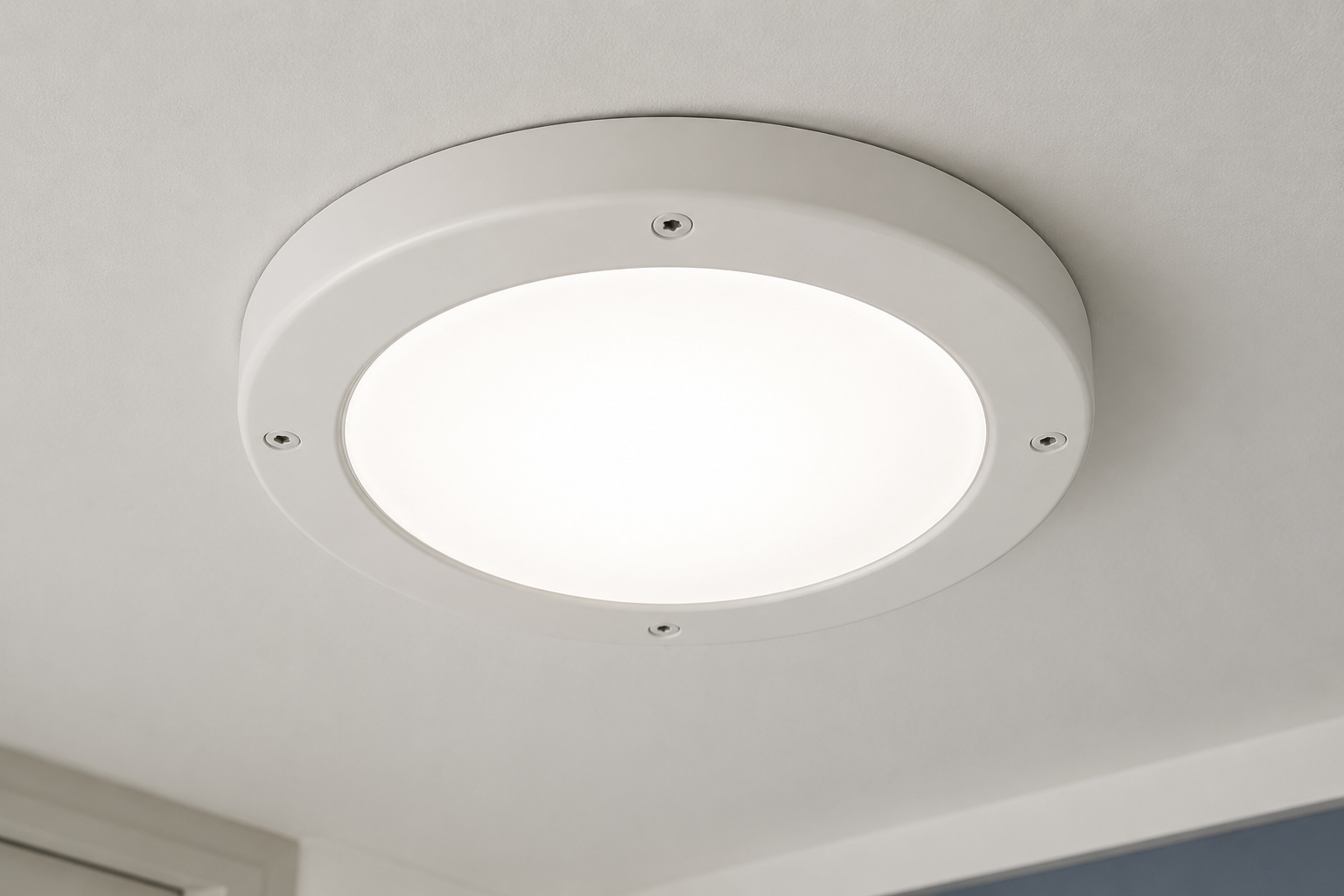
One of the most effective ways to improve the indoor environment is through lighting that supports natural circadian rhythms. Tunable white lighting systems can adjust colour temperature and intensity throughout the day, mimicking the natural progression of daylight. Cooler, brighter light during daytime hours promotes alertness and engagement, while warmer lighting in the evening encourages relaxation and supports healthy sleeping patterns. This is particularly valuable in inpatient mental health settings where patients may have limited opportunities to experience natural daylight. The anti-ligature luminaires utilised in secure healthcare environments enable these benefits to be delivered safely while maintaining a therapeutic atmosphere, such as the ASD Harmony Profile Anti-Ligature luminaire with tunable white functionality used to mimic circadian rhythms. The specification also combines high efficiency of 109lm/W with a robust, vandal-resistant design suitable for healthcare and secure environments.
Creating Therapeutic and Energy-Efficient Spaces
Lighting design must balance visual comfort, safety and sustainability. Harsh glare, poor uniformity and excessive brightness can contribute to stress and discomfort, whereas carefully controlled lighting schemes create calmer and more reassuring environments. Integrating energy-efficient LED technologies helps reduce energy demand without compromising user experience.
By combining high-performance lighting, intelligent controls and occupancy-based operation, healthcare facilities can lower energy consumption while delivering comfortable environments for patients, visitors and staff. This approach supports both the clinical objectives of the facility and wider NHS sustainability targets.
A Whole-Building Approach to Mental Healthcare Design
The benefits of sustainable design extend far beyond lighting. Mental health facilities increasingly incorporate low-carbon technologies, improved building fabric performance, renewable energy systems and advanced environmental controls to create healthier internal environments. Better daylighting, thermal comfort and indoor environmental quality can all contribute to improved patient experiences and staff satisfaction. At the same time, reducing energy consumption helps healthcare providers minimise operational costs and future-proof facilities against evolving carbon reduction requirements.
Delivering Sustainable, Cost-Effective and Recovery-Focused Mental Healthcare Facilities
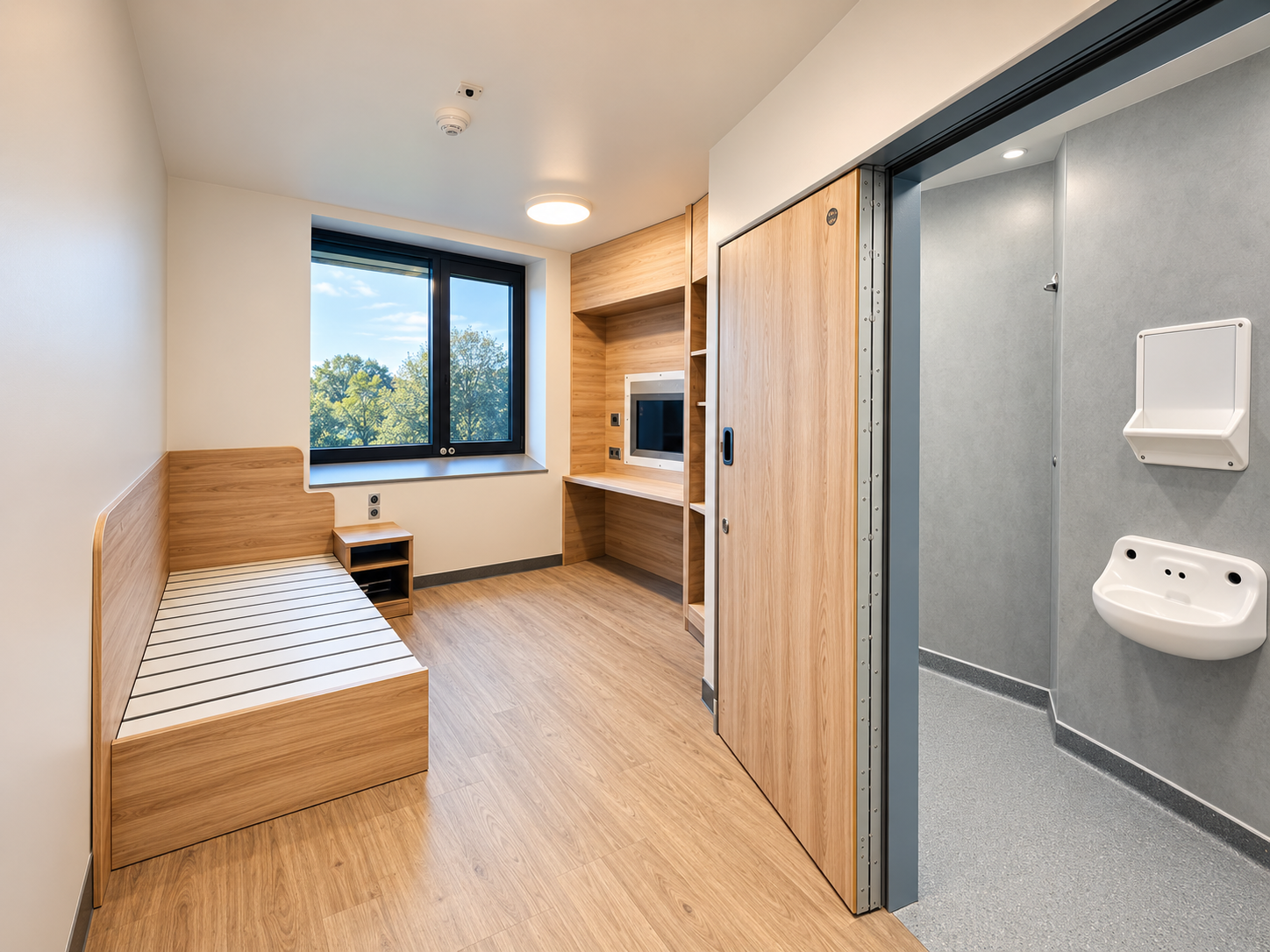
At DSSR, these principles have been implemented on projects including the Acute Mental Health Inpatient Unit at Lincoln County Hospital and the Havenside Boston Norton Lea Adult Acute Inpatient Unit. Havenside was developed through extensive engagement with clinicians, carers, patients and Experts by Experience to create an environment that promotes dignity, independence and wellbeing while supporting the Trust’s wider transformation of mental healthcare services.
The facility demonstrates how therapeutic design and sustainability can work hand in hand. Tunable white lighting supports patient wellbeing through circadian rhythm control, helping create environments that feel more connected to natural daylight cycles. At the same time, the wider building services strategy has been designed to achieve EPC A and BREEAM Excellent standards, with forecast operational carbon reductions of approximately 61.5 tonnes of CO₂ annually. The incorporation of high-efficiency systems is expected to generate around 155MWh of annual energy savings, while roof-mounted solar PV provides a further 50.6MWh of renewable electricity generation each year.
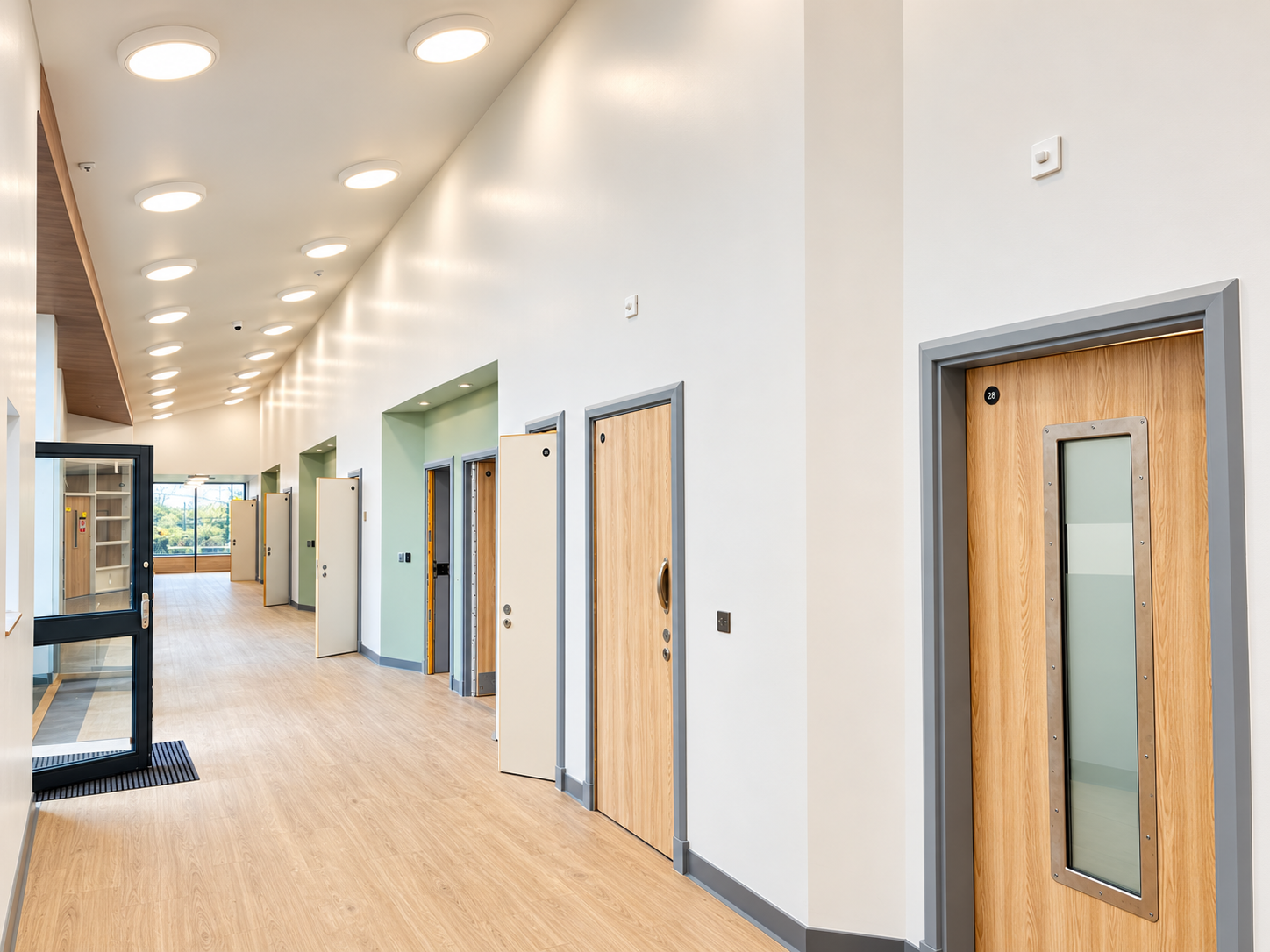
Beyond the environmental benefits, these measures help reduce long-term operational energy demand and associated utility costs, improving whole-life value for the Trust and supporting NHS Net Zero ambitions. By lowering the cost of running the facility, healthcare providers can focus greater resources on frontline services while delivering higher-quality environments for patients, staff and visitors. This demonstrates how intelligent lighting design and sustainable engineering can create mental health facilities that not only support recovery and wellbeing but also provide lasting financial and environmental benefits.
If you want to learn more on how our lighting design specialists deliver solutions that enhance wellbeing, improve sustainability and reduce operational costs, click the link below:


Cooling Infrastructure in Healthcare
28 July 2026
Cooling Infrastructure in Healthcare
Scroll down to read more
Preparing Hospitals for a Warmer Future: Why Cooling Infrastructure Matters More Than Ever
As temperatures continue to rise and periods of extreme heat become more frequent, healthcare estates face increasing pressure to maintain safe, comfortable and resilient clinical environments. Whilst patients and visitors rarely see the infrastructure operating behind the scenes, cooling systems play a vital role in ensuring hospitals can continue functioning efficiently throughout the year.
From outpatient departments and theatres to diagnostic facilities and support spaces, modern healthcare buildings rely on critical mechanical infrastructure to maintain appropriate environmental conditions. Ageing cooling systems can present significant operational risks, including reduced reliability, increased maintenance requirements and the potential for disruption during periods of peak demand.
For NHS Trusts, investing in replacement and refurbishment programmes is about far more than replacing outdated equipment. It is about protecting patient care, supporting staff wellbeing and ensuring healthcare facilities remain fit for purpose for the future.
The Growing Challenge of Overheating in Healthcare Buildings
Many healthcare facilities across the UK were designed and constructed in a very different climate to the one we experience today. As summer temperatures increase, hospitals are seeing greater demands placed upon cooling and ventilation systems that may already be approaching the end of their operational life.
Clinical environments often contain heat-generating medical equipment, high occupancy levels and spaces that must remain operational throughout the year. Maintaining comfortable temperatures is therefore not simply a matter of comfort; it is an important component of providing safe and effective healthcare services.
The challenge for NHS estates teams is identifying how best to upgrade infrastructure whilst ensuring patient services continue uninterrupted throughout the project lifecycle.
Engineering Solutions That Keep Hospitals Running
Successful infrastructure replacement projects require a detailed understanding of existing assets, operational requirements and future capacity needs. The process typically begins with condition surveys, feasibility studies and option appraisals to identify the most appropriate solution for each facility.
From there, detailed design development, stakeholder engagement and phased delivery strategies are required to ensure essential services remain operational throughout construction.
At DSSR, we have extensive experience supporting NHS Trusts with the replacement and modernisation of critical healthcare infrastructure. Projects such as the University Hospital Lewisham theatre ventilation upgrade and the Queen Elizabeth Hospital Services Infrastructure Project demonstrate the importance of careful planning, collaboration and technical expertise when working within live healthcare environments. These schemes involved the replacement and enhancement of electrical distribution systems, critical ventilation, cooling and building services infrastructure whilst maintaining business continuity for the Trust.

University Hospital Lewisham
Map data: Data SIO, NOAA, U.S. Navy, NGA, GEBCO IBCAO Landsat/Copernicus
Delivering Long-Term Resilience
Modern cooling infrastructure provides more than a replacement for ageing plant. It offers opportunities to improve energy efficiency, reduce maintenance requirements, enhance operational resilience and support long-term sustainability objectives.
By taking a proactive approach to asset replacement, healthcare organisations can improve reliability whilst reducing the likelihood of disruptive failures and emergency interventions.
As NHS estates continue to evolve, investment in resilient building services infrastructure will play an increasingly important role in supporting patient care and future-proofing healthcare facilities for generations to come.
At DSSR, we are proud to support healthcare providers in delivering these essential improvements, ensuring critical infrastructure continues to perform when it matters most.

International Women in Engineering Day 2026
18 June 2026
International Women in Engineering Day 2026 at Turnbull High School
Scroll down to read more
International Women in Engineering Day 2026
Last week, Regional Director, Lindsay Wood, was invited to support an event for International Women in Engineering Day. She went along to Turnbull High School to provide the students with valuable insight into the sector and discuss the pathway into its many different fields.
By Lindsay Wood
I was pleased to be invited to attend the 7th annual International Women in Engineering Day (INWED) event at Turnbull High School. The primary purpose of this event is to encourage girls to consider engineering as a career path through discussion and practical engagement in core engineering principles.
It was encouraging to see that around 70 female pupils from second year, from schools across East Dunbartonshire, attended the day-long event to meet women in the engineering field and find out more about the jobs they do.
Including myself, female engineers from 8 different organisations attended the event. It featured an icebreaker, practical group activities, and a Q&A session for pupils to be able to ask all the engineers about our routes into engineering, our career pathways, and more about our specific jobs.
The girls worked in smaller groups, rotating around various practical activities that the engineers had prepared related to our specific fields of engineering. We created a wide range of activities to spark their imaginations and show how different engineering roles can have significant positive impacts on society. These activities ranged from building structures from paper straws and paper that had to withstand the wind loading of a hairdryer, bridges between tables made from Knex, to building a railway & working out the signalling controls, to improving the internal environment of a space using building services.
In DSSR’s activity, the girls were invited to consider how they could improve their classroom environment using a variety of measures, but working within a cost budget, with improvement targets for carbon, air quality & comfort. I was proud to see the girls discuss the merits of the various measures and the competing requirements that some of the targets posed. They quickly learned (as will be familiar to my colleagues in the engineering field) that in order to achieve their budget, compromise was needed!
It may have been the result of a throwaway remark to my daughter’s maths teacher, but I am very happy to have been invited to support the International Women in Engineering Day and help the next generation of women get a better understanding of the opportunities in the sector and, more broadly, how engineering influences their environment.

All-Energy Conference 2026
2 June 2026
DSSR Sustainability team at The All-Energy Conference 2026
Scroll down to read more
DSSR attend the All-Energy Conference at SEC
The DSSR Sustainability team was represented at the All-Energy Conference at the SEC Event Campus by Sustainability Specialist, Atheya Rajeev. Here is her account of the event:
By Atheya Rajeev
As part of the sustainability team, I attended the All-Energy Conference at SEC Event Campus. I engaged with a wide range of important topics, covering grid & networks, local & community energy, heat decarbonisation, and retrofitting in the built environment. It was particularly encouraging to see a strong alignment across sectors towards achieving net zero, alongside a clear emphasis on empowering the next generation to lead and shape the future energy workforce.
My highlights included sessions on the following topics:
- Clean Power 20230: Are we still on Track?
- Alleviating Fuel Poverty Through Community Ownership
- Heat Network Scotland – A Home and a Voice for the Heat Network Sector in Scotland
- Retrofit Realities: Delivering Warmer and Healthier Homes on the Road to Net Zero
The sessions attended provided a strong cross-sector perspective on the challenges and opportunities shaping the UK’s transition to a net zero energy system, many of which directly reflect the work we are delivering at DSSR.
Much of the discussion explored whether current policy, infrastructure investment and delivery capacity are sufficient to meet national targets, highlighting the critical role of grid resilience, coordinated planning and demand reduction. These are areas where DSSR actively contributes through intelligent building services design, reducing operational energy demand at source while supporting wider system decarbonisation.
A recurring theme across the shorter sessions was the importance of people-centred and place-based solutions. The session on alleviating fuel poverty through community ownership demonstrated how local energy models can deliver both social value and long-term resilience, aligning closely with DSSR’s ethos of creating efficient, cost-effective buildings that deliver tangible benefits for end users.
Discussions around Heat Network Scotland reinforced the growing importance of low-carbon heat infrastructure, an area where our in-house expertise—including CIBSE Heat Network consultancy and low-carbon energy assessment—allows us to support clients in navigating emerging policy and technical requirements.
The “Retrofit Realities” session was particularly relevant to the built environment, focusing on the practical challenges of upgrading existing buildings to meet net zero targets while improving occupant health and comfort. This mirrors a significant proportion of DSSR’s current project work, where our sustainability specialists apply advanced modelling, BREEAM methodologies and performance-led design to balance fabric improvements, services upgrades and whole-life carbon considerations.
As I noted earlier, I was particularly encouraged to see such a focus on the diverse ways we can achieve net zero, and what I believe is a vital emphasis on empowering the next generation of the future energy workforce. It is essential to have a meaningful commitment to delivering low-carbon, high-performance buildings through multidisciplinary collaboration, evidence-based design and a proactive approach to sustainability.


High Voltage Design and Consultancy
14 May 2026
High Voltage Engineering at DSSR
Scroll down to read more
Delivering Safe, Resilient and Future-Ready High Voltage Infrastructure
At DSSR, our High Voltage (HV) expertise is centred on delivering robust, efficient and future-proof electrical infrastructure that underpins critical operations across healthcare, education, industrial and commercial sectors. From feasibility through to detailed design and delivery, we provide a fully integrated HV service that ensures reliability, compliance and long-term resilience for our clients’ assets.
Our engineers recognise that HV systems are fundamental to operational continuity, particularly within critical environments such as hospitals where power resilience is essential. We work closely with clients, Distribution Network Operators (DNOs), and Independent Network Providers (IDNOs) to develop tailored solutions that align with project constraints, regulatory requirements and long-term energy strategies.
A key example of this is our work on the Northumbria Specialist Emergency Care Centre, where DSSR delivered full M&E design for a major acute healthcare facility. The scheme incorporated a highly resilient 11kV private network configured as an open ring, distributing power to twin transformer substations across the site, alongside N+1 standby generation connected at HV level to maintain continuity of critical services. This approach demonstrates our capability to design fail-safe, high-performance infrastructure for environments where downtime is not an option.

Source: Google Earth
Comprehensive High Voltage Design and Consultancy
DSSR offers a complete suite of HV services, including network design, load assessments, substation design, cable routing, protection coordination and system studies. Each project is carefully assessed to develop optimised infrastructure solutions that balance capital cost with operational efficiency and long-term maintainability.
We also support clients with grid connections, capacity applications and liaison with statutory authorities, helping to streamline approvals and reduce programme risks. Our experience across complex, multi-phase developments allows us to anticipate challenges early and design solutions that integrate seamlessly with wider building systems.
On the Northumbria project, this holistic approach extended to advanced control systems, including a bespoke energy management and PLC-based control solution to monitor HV and LV distribution and automatically respond to faults or power failures. This level of integration ensures that systems are not only compliant, but intelligent and responsive in operation.
Supporting Decarbonisation and Future Energy Demands
As the built environment evolves, high voltage infrastructure is playing a critical role in enabling decarbonisation. Electrification of heat, electric vehicle infrastructure and renewable energy integration are placing increasing demands on electrical networks.
DSSR supports clients in responding to these challenges by designing scalable HV systems that can adapt to future load increases while maintaining resilience. Our approach considers not only current demand but long-term asset performance, ensuring infrastructure can support Net Zero strategies and emerging technologies.
On large-scale healthcare developments such as Northumbria, this included evaluating energy and carbon reduction strategies alongside HV system design, ensuring that resilience and sustainability are delivered in parallel.
A Trusted Partner for Critical Infrastructure
DSSR has delivered HV solutions across a wide range of sectors, with particular strength in healthcare estates requiring uninterrupted power and complex system integration. Our collaborative working style ensures close alignment with design teams, contractors and stakeholders throughout delivery.
Our work at the Northumbria Specialist Emergency Care Centre highlights our ability to design and deliver highly resilient HV infrastructure within complex, mission-critical environments, overcoming architectural and spatial challenges to achieve a fully integrated solution.
By combining technical excellence with a practical, delivery-focused mindset, we ensure that high voltage systems are not only well-designed but successfully implemented on site.
At DSSR, our High Voltage specialism is about more than compliance—it is about enabling performance, resilience and long-term value for our clients.



DSSR Named Among Building’s Top 150 Consultants for 2026
DSSR is pleased to once again be recognised in Building Magazine’s annual Top 150 Consultants rankings, which bring together some of the UK’s largest architectural, engineering, surveying and project management consultancies.
The 2026 table places DSSR among the UK’s Top 100 consultancies, with the practice ranked 96th overall. The annual survey benchmarks firms across the industry using measures including UK fee income, staff numbers and office presence.
This year’s results record a UK team of 99 people across our three offices, reflecting the depth of expertise that enables us to support clients and project teams throughout the UK.
As an independent building services engineering and sustainability consultancy, DSSR continues to work across a diverse range of sectors, delivering sustainable MEP design and helping clients improve building performance and progress towards net zero carbon.
Our continued inclusion within the Top 150 is welcome recognition of the scale of the practice and, most importantly, the contribution of our people. It is their expertise, commitment and collaborative approach that underpin the work we deliver for clients every day.
We look forward to building on that experience as we continue to develop our capabilities and support projects across the UK.